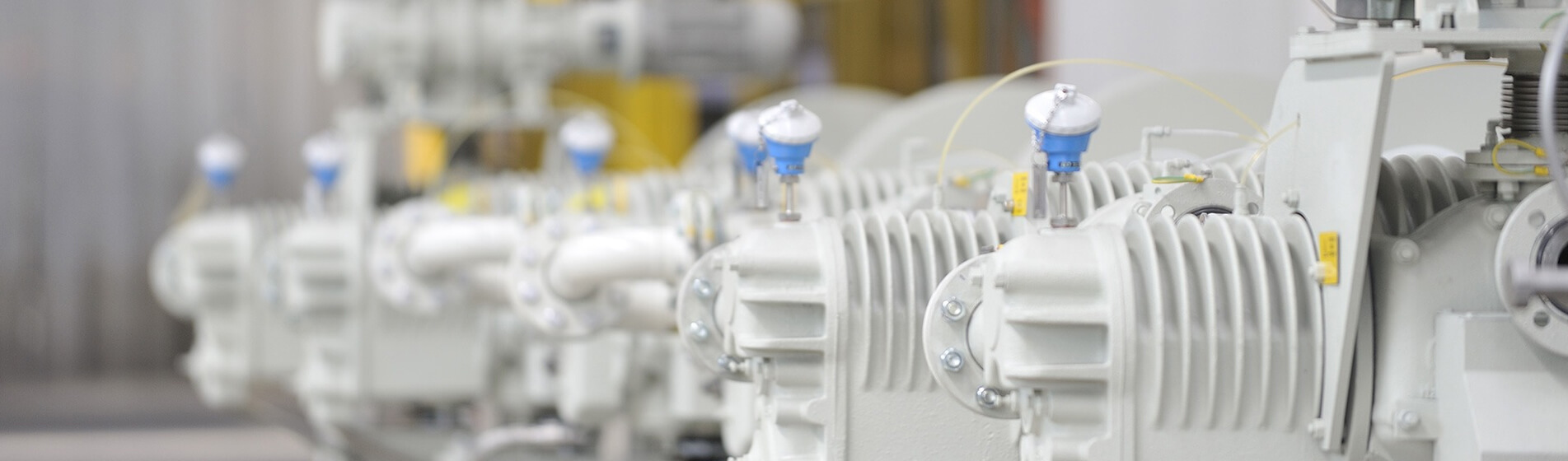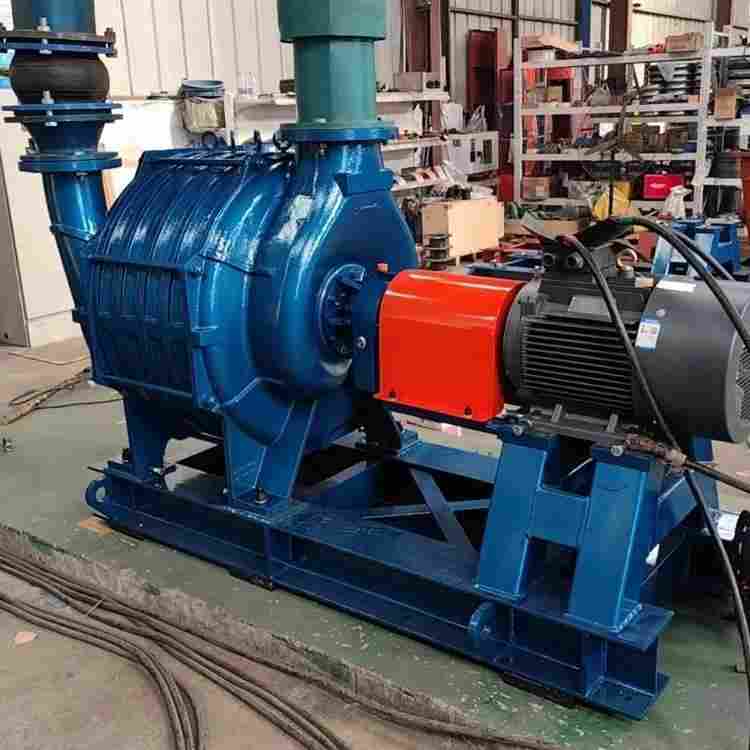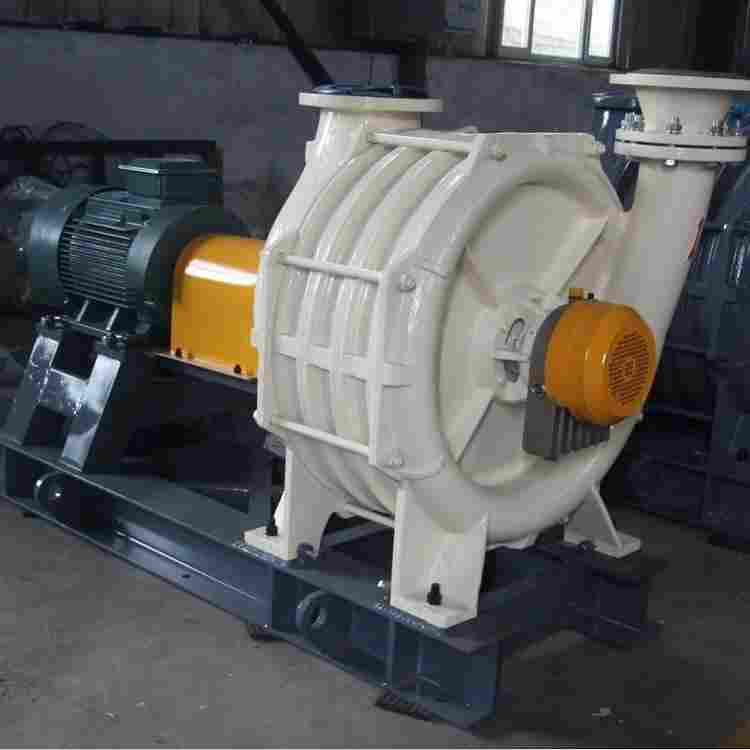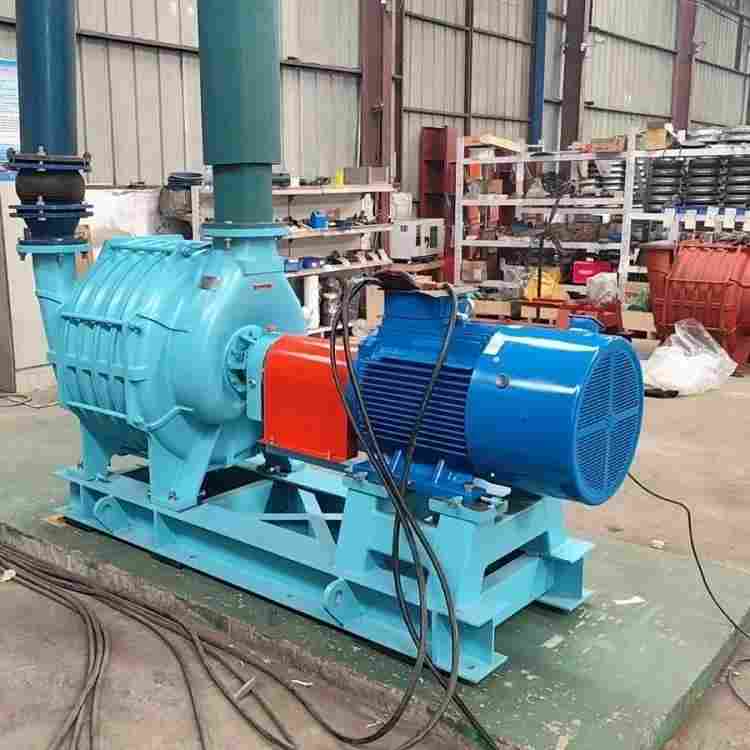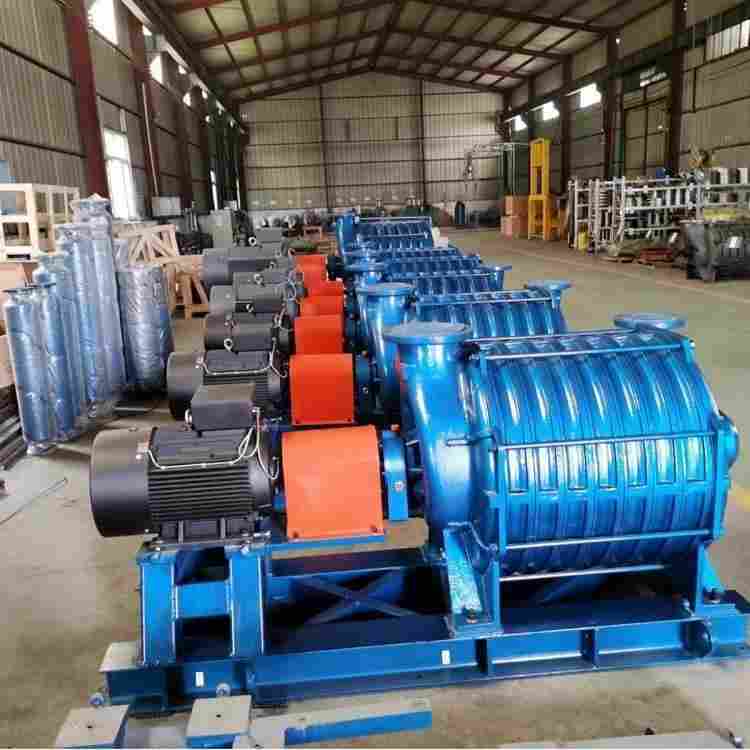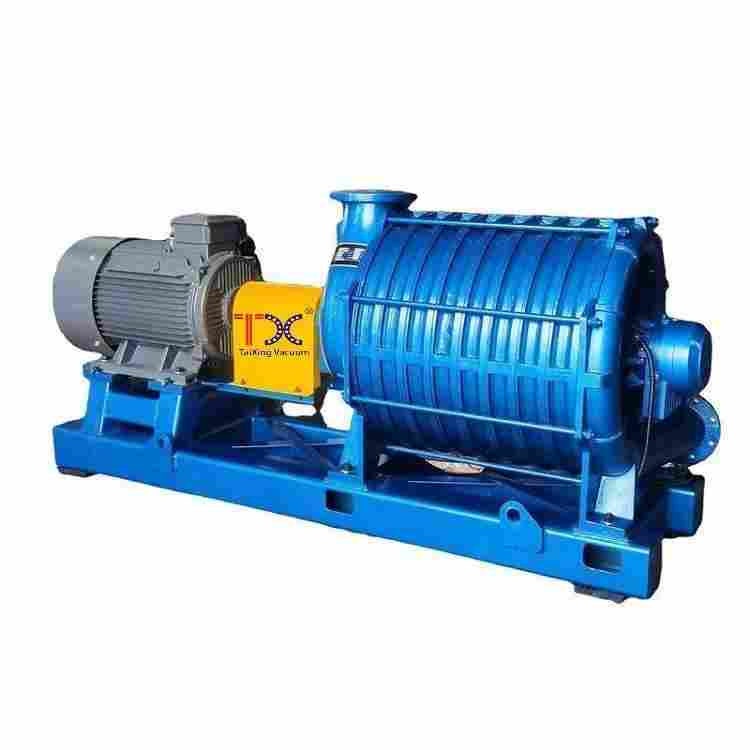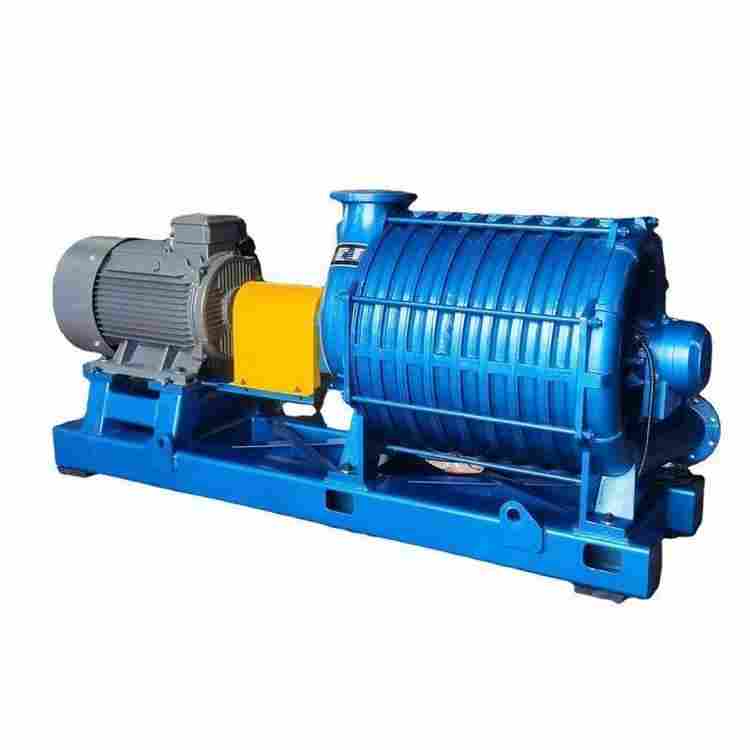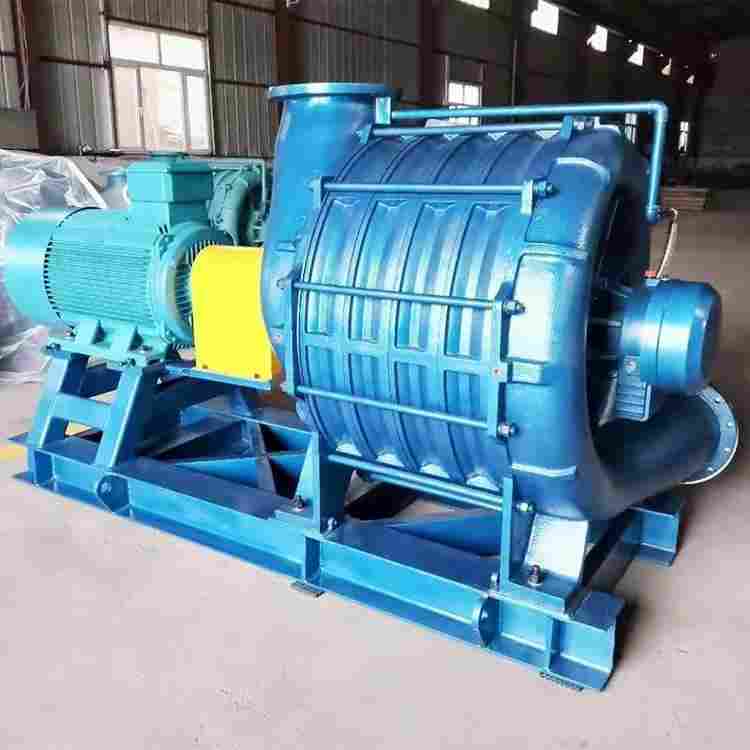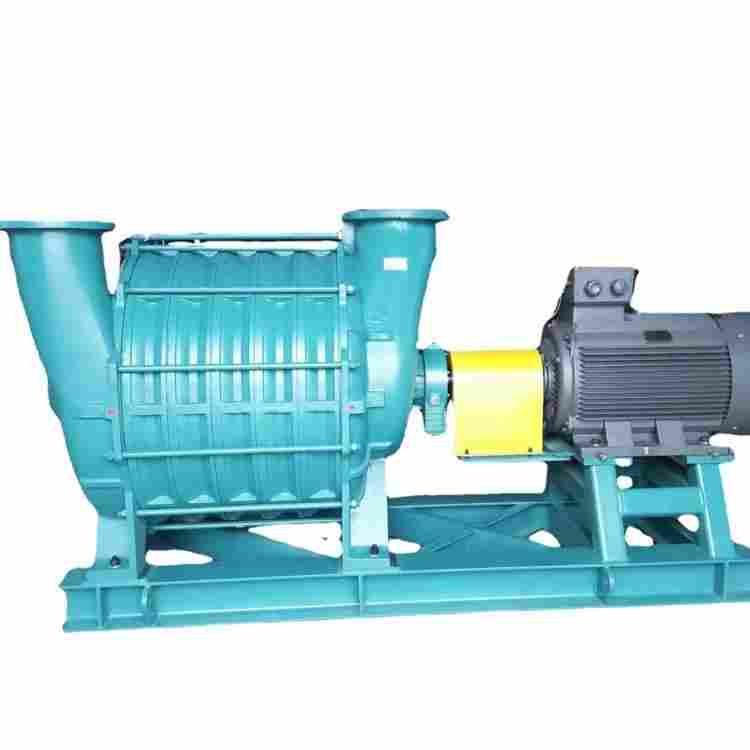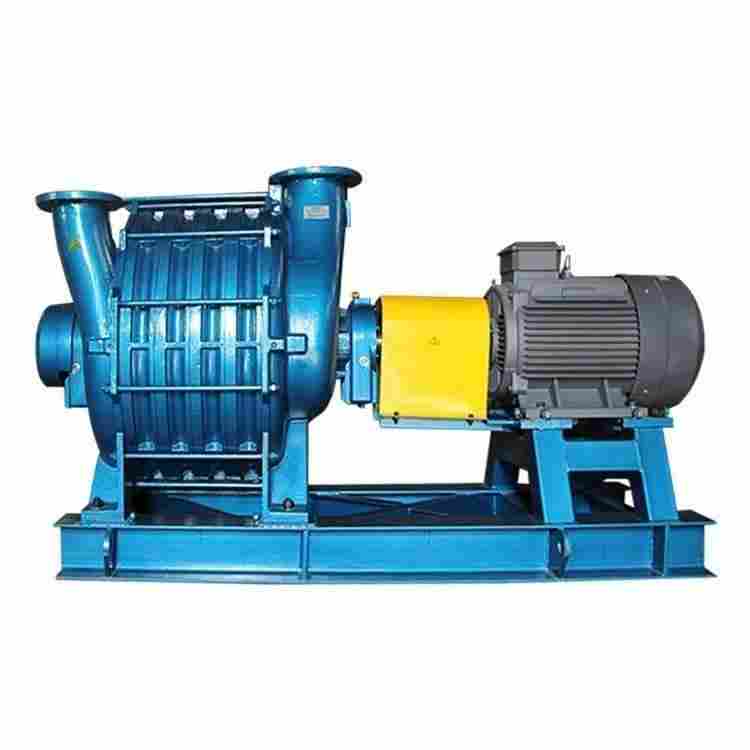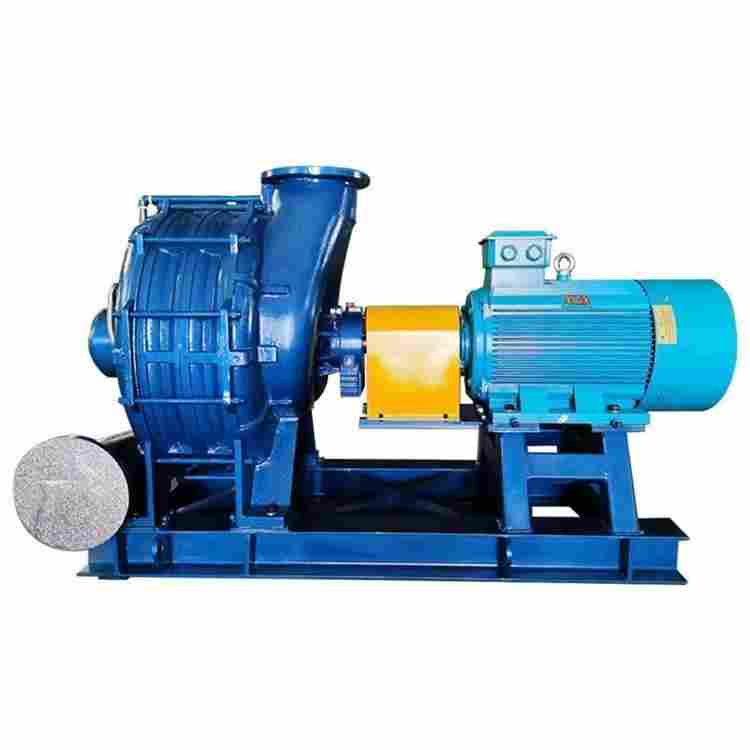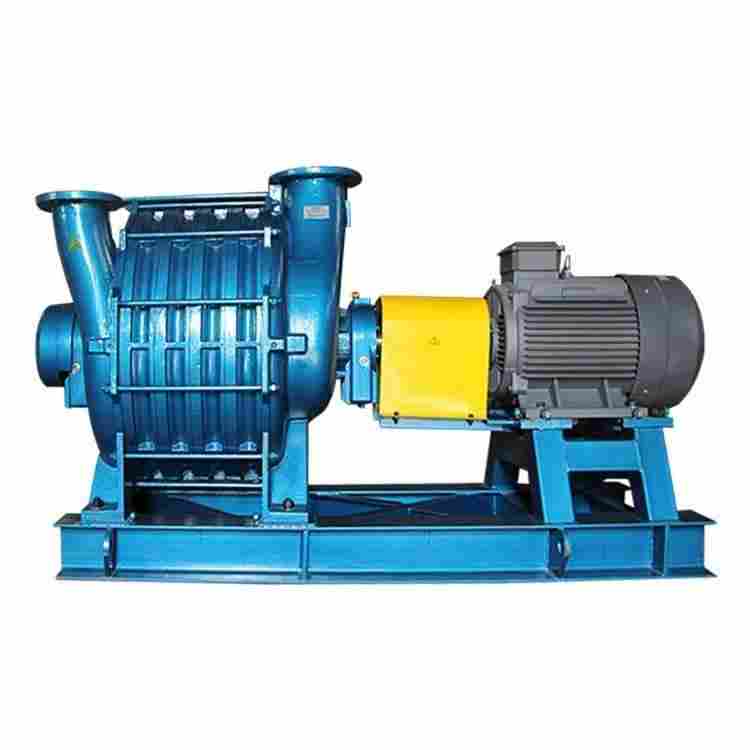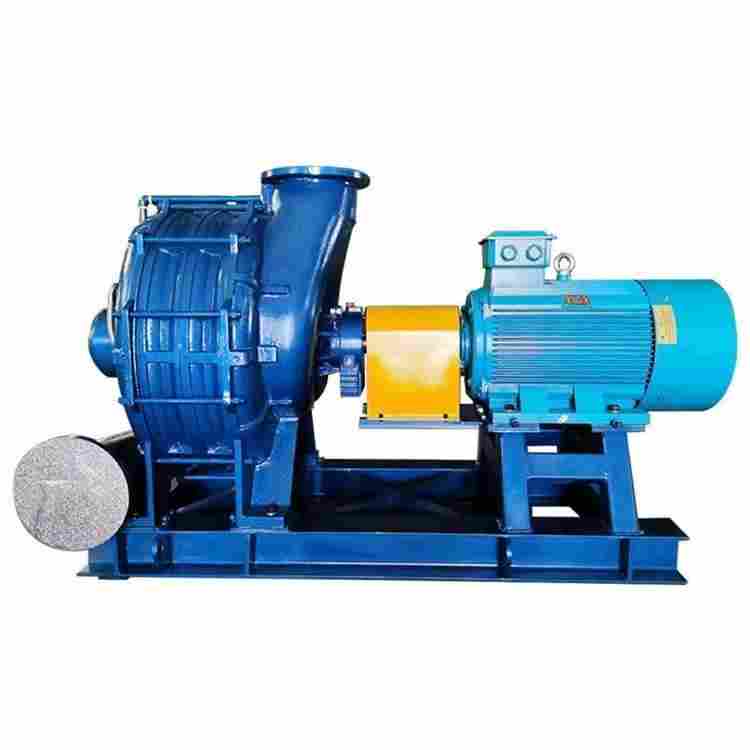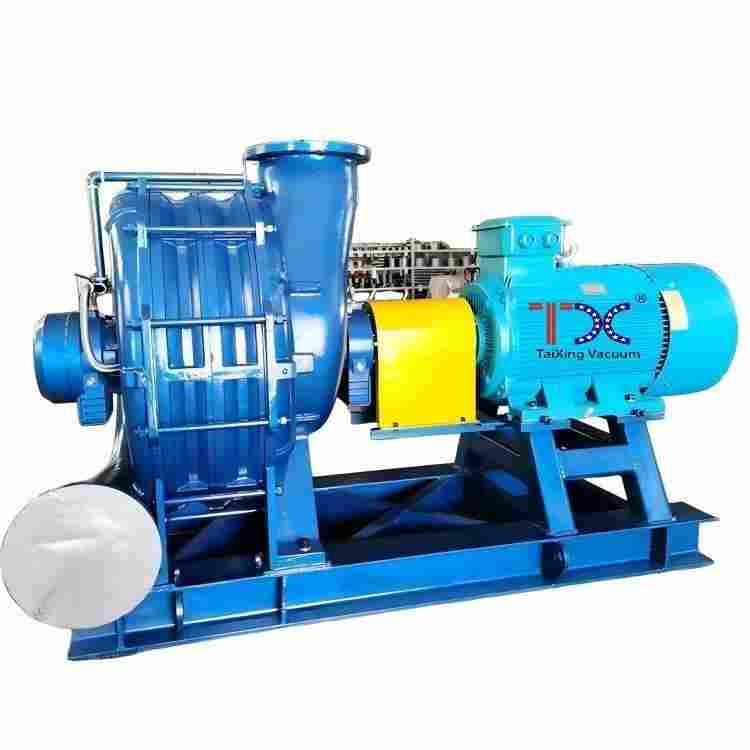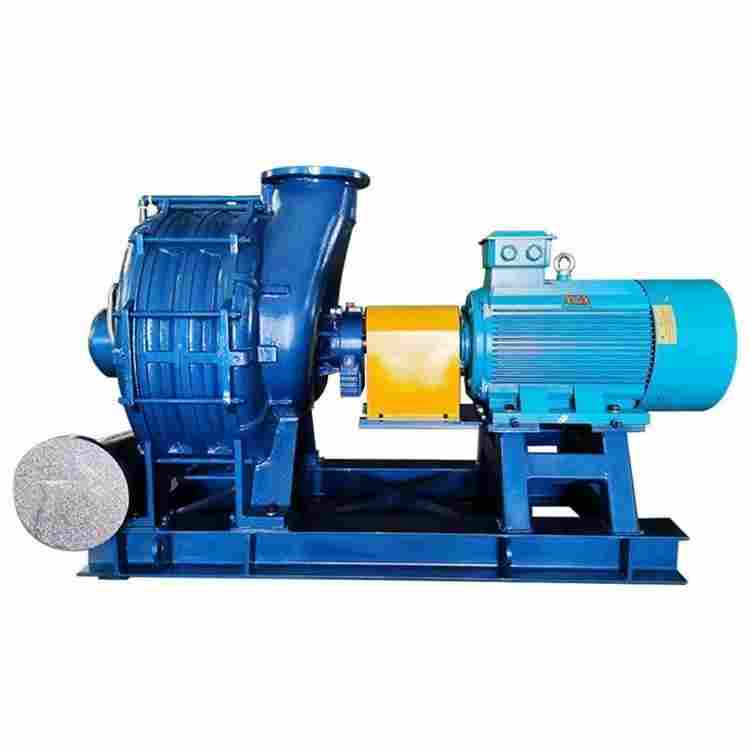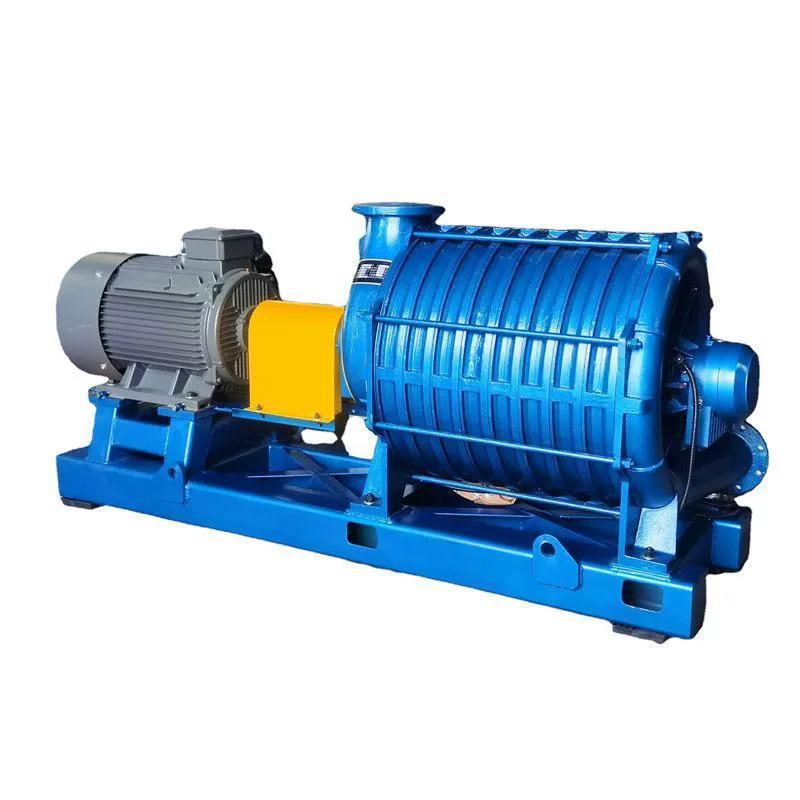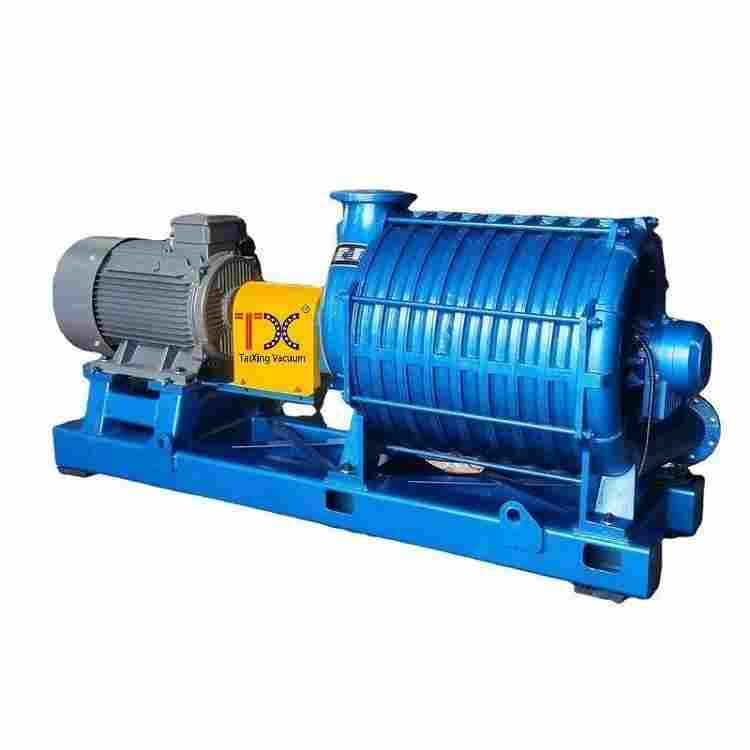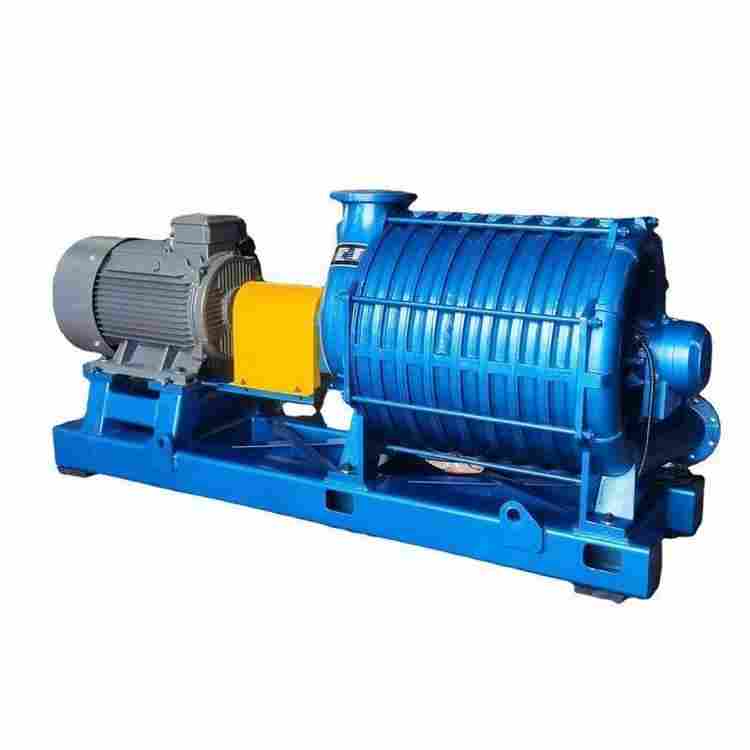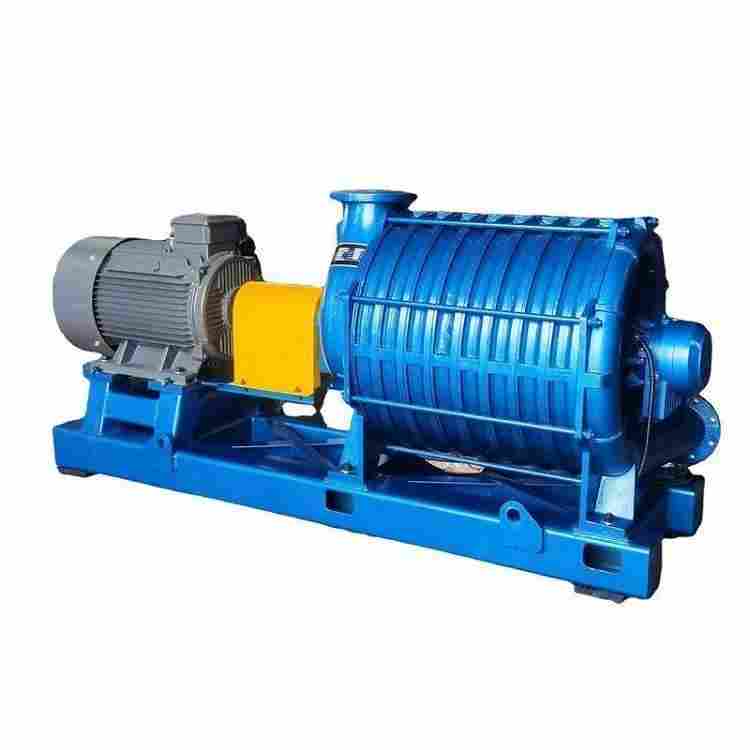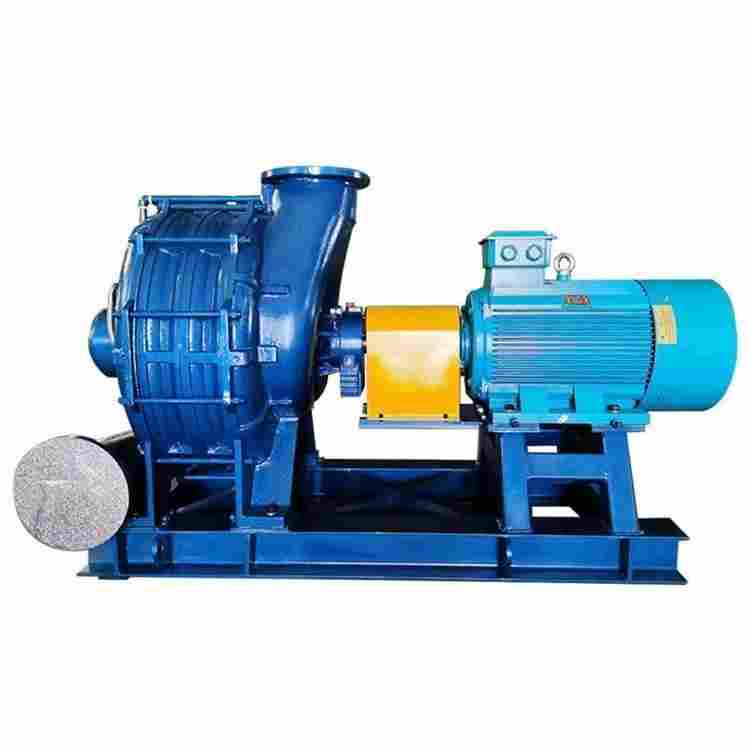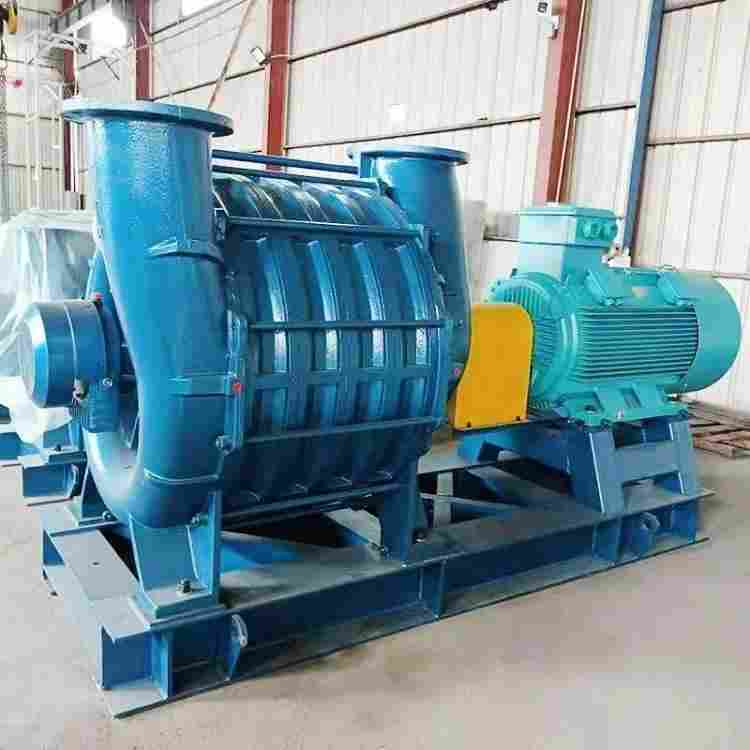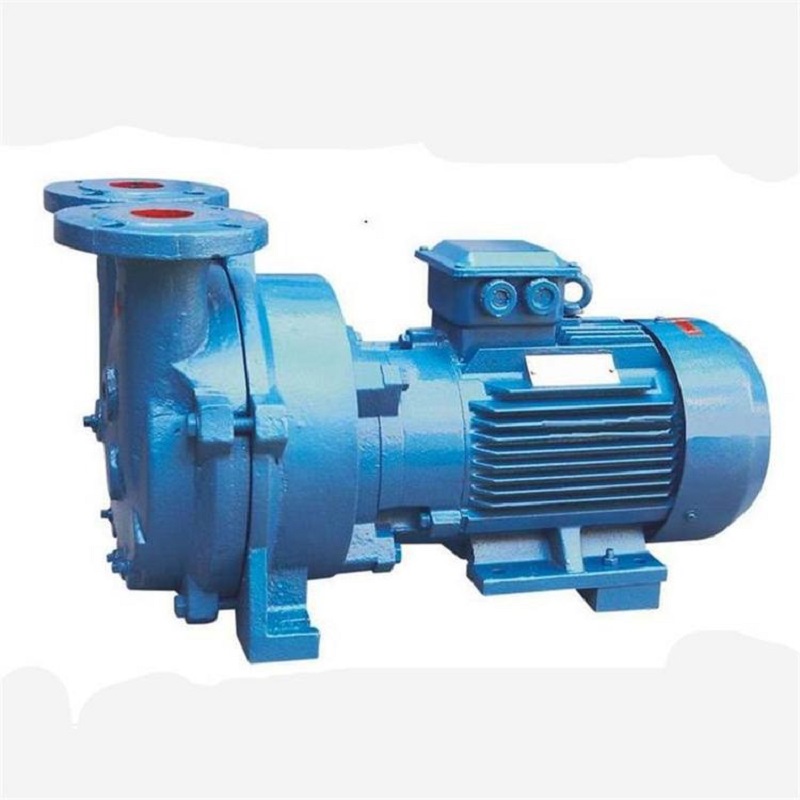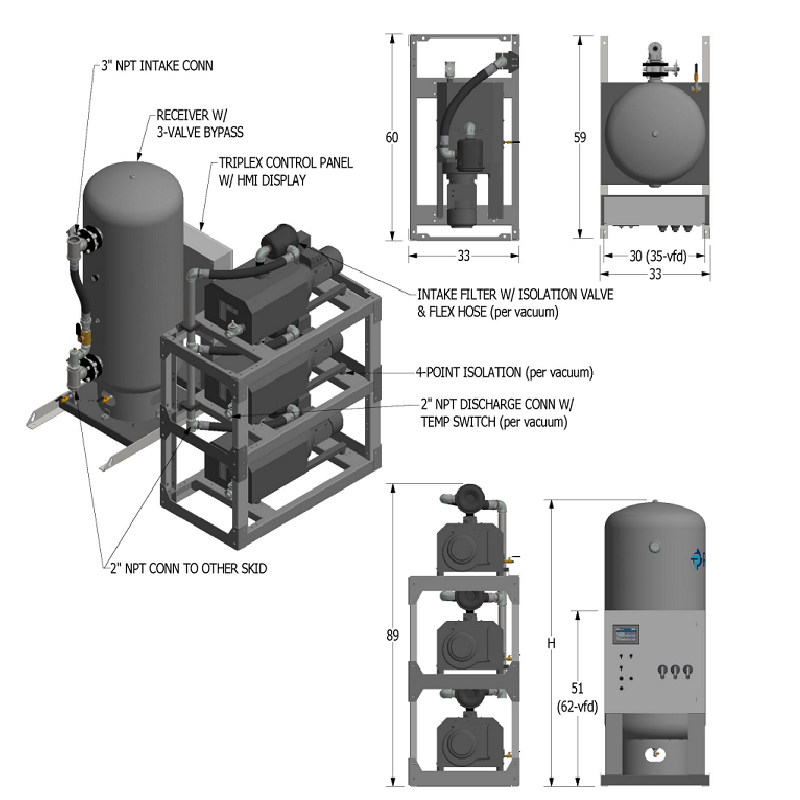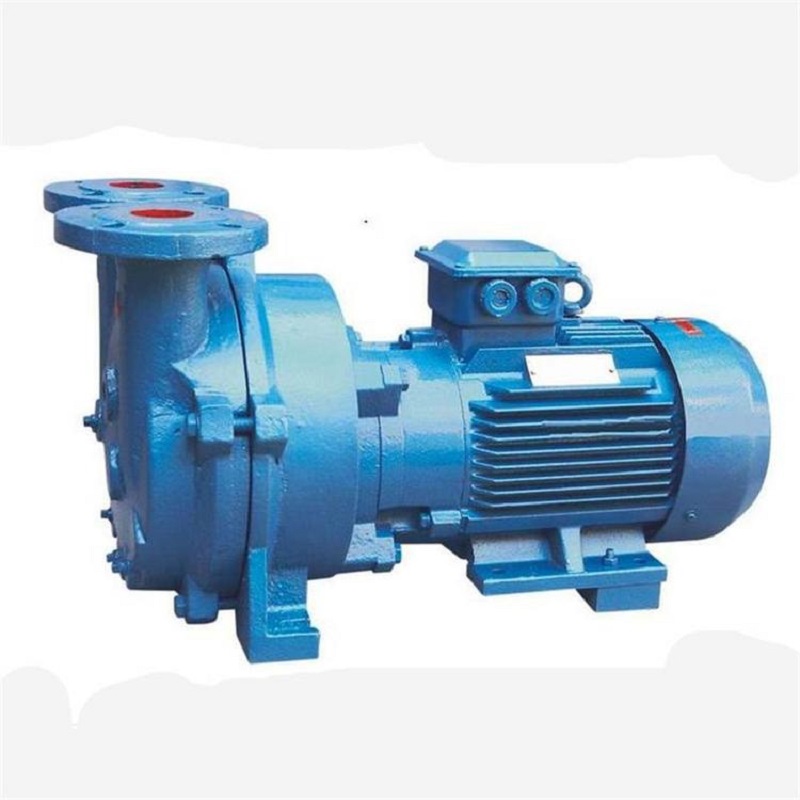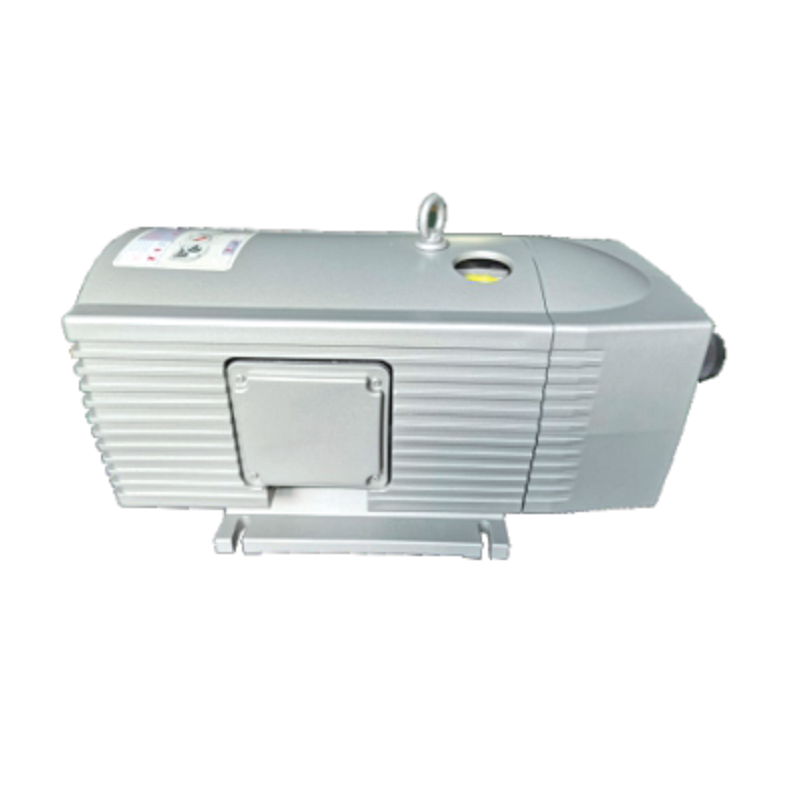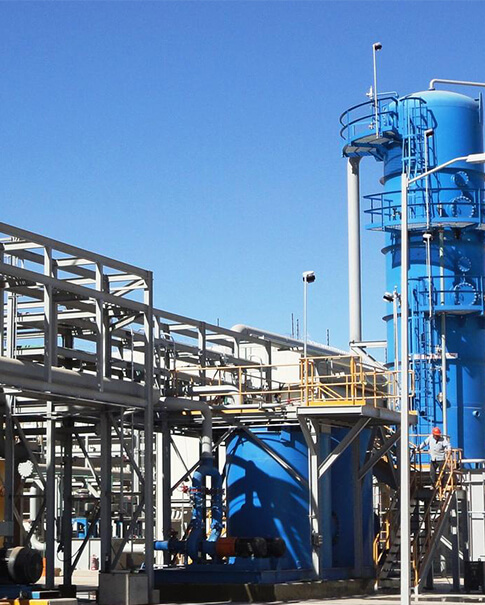
A centrifugal blower, also known as a turbo blower, increases the pressure and flow rate of gas through the action of a rotating impeller, enabling continuous air delivery. Its working principle is that when the motor rotates, it drives the fan impeller to spin, and the gas is flung outward under centrifugal force, changing direction as its kinetic energy is converted into static pressure. The gas is discharged from the outlet, while a certain negative pressure is formed between the impeller blades, allowing external gas to enter under atmospheric pressure, achieving continuous air blowing. Centrifugal blowers are divided into multi-stage and single-stage centrifugal blowers based on the number of impellers. A multi-stage low-speed centrifugal blower typically refers to a rotor with two or more impellers mounted in series on the same main shaft, with up to eight stages of blades, and a rotor speed of 3000–3600 r/min. Centrifugal blowers generally use an inlet throttle to regulate flow and pressure, allowing the fan to operate at relatively low power without the need for exhaust adjustment, while maintaining high efficiency close to the same as the rated operating condition. They are used in applications where both pressure and flow are unstable.
Tags :
Tags :
Tags :
Tags :
Tags :
Tags :
Tags :
Tags :
Tags :
Tags :
Tags :
Tags :
Tags :
Tags :
Tags :
Tags :
Tags :
Tags :
Tags :
Tags :
Tags :
Tel : +86-15880223078
WhatsApp : +86-13959235484
Email : vacuum@xiamenbest.com
Address : No. 19, Dongan Qianzhanli, Jimei District, Xiamen city china