内页banner
Blog
  • vacuum pumps & Helium Leak Detector vacuum pumps & Helium Leak Detector Jun 17, 2022
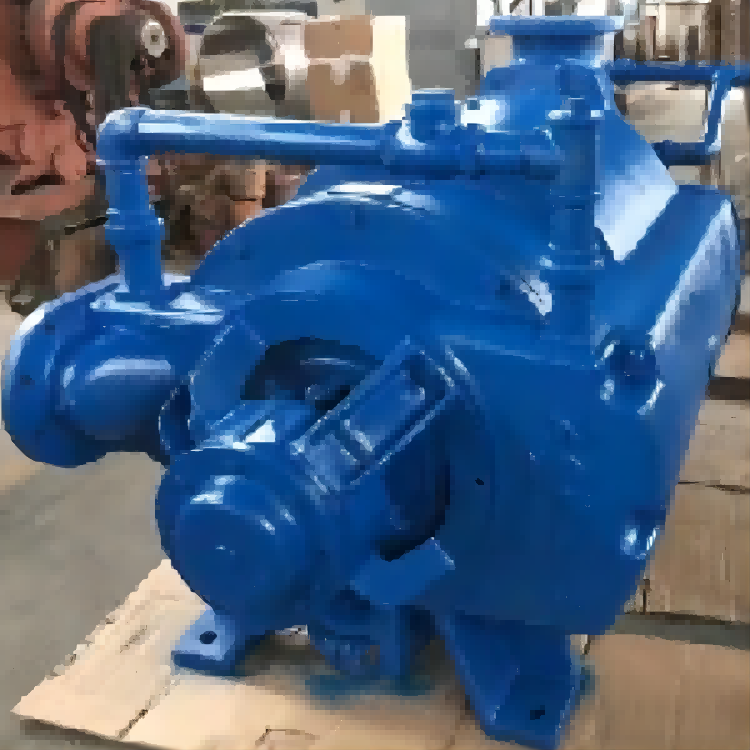
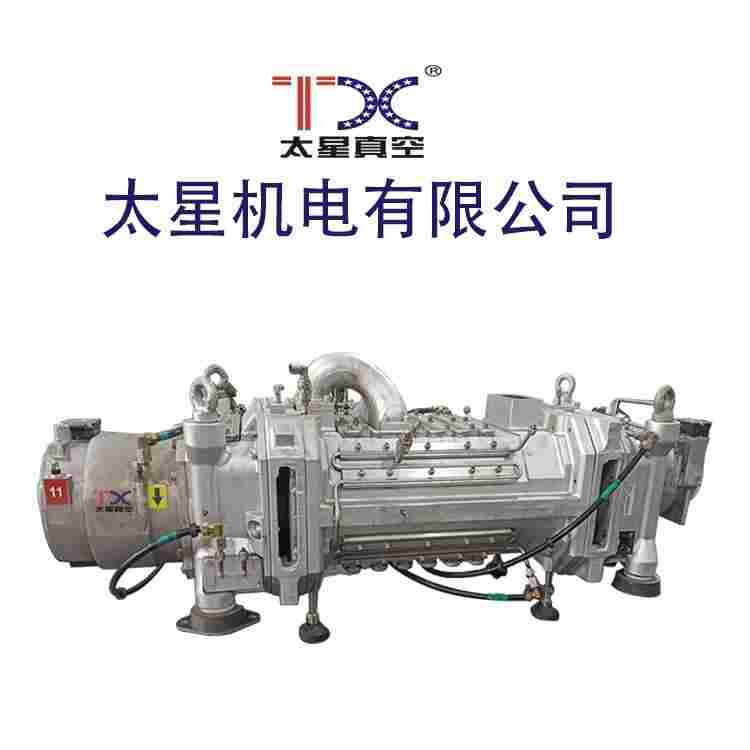
      { "@context": "https://schema.org/", "@type": "Product", "name": "Dry Screw Vacuum System", "image": [ "https://new.cdn.multi-masters.com/product/Dry-Screw-Vacuum-System-Applications-and-Suitability-1737687703438.png" ], "description": "Oil-free, high-efficiency dry screw vacuum system manufactured in China, suitable for semiconductor, chemical, and pharmaceutical applications.", "brand": { "@type": "Brand", "name": "TaiXing" }, "manufacturer": { "@type": "Organization", "name": "TaiXing Vacuum Tech" }, "offers": { "@type": "Offer", "url": "https://www.tx-vacuumpump.com/product/Dry-Screw-Vacuum-System-Applications-and-Suitability-%7C-China-Manufacturer", "priceCurrency": "USD", "availability": "https://schema.org/InStock" } } 2BV5 liquid ring vacuum pump is single stage monoblock design vacuum pump. Together with the drive motor forms a compact, space and energy-saving unit. With CE and Atex certificate, it is an ideal product for much different application including Plastics Industry, Medical Industry, Chemical Industry, Medical technology, Processing Industry, Food and Beverage Industry and other General Industry TXL 860Helium Leak Detectors TXL 840wet Helium Leak Detectors TXL 840Dry Helium Leak Detectors TXL 830 Helium Leak Detectors TXL Series-Helium-Leak-Detectors Helium mass spectrometer leak detector TX280S Helium mass spectrometer leak detector TX400H Helium-Leak-Detectors TX280H Series Helium-Leak-Detectors Pfeiffer-Adixen-ASM-Series-Helium-Leak-Detectors Agilent-Helium-Leak-Detector   CL liquid ring vacuum pump is our new developed pump based on old Nash CL pump. It is single stage vacuum pump with traditional conical porting design which is more suitable for heavy duty application. It can be used as a vacuum pump and compressor, max discharge pressure is 2.5 bar abs. The CL series offers medium capacity ranging from 900 to 5100m³/h, it is widely used in many application including: autoclaves, carburetor testing, chucking, condenser exhausting, container filling, cooking, drying, evisceration, exhausting, extruder venting, fiber setting, filtering, forming, gas stripping, molding, pickup and conveying, priming, slot extraction, and solvent recovery. CL700 series liquid ring vacuum pump CL1000 series liquid ring vacuum pump CL2000 series liquid ring vacuum pump CL3000 series liquid ring vacuum pump CL4000 series liquid ring vacuum pump  
  • KYKY ZQJ Series Helium Leak Detector Portable Dry High-Performance Models KYKY ZQJ Series Helium Leak Detector Portable Dry High-Performance Models Jan 14, 2026
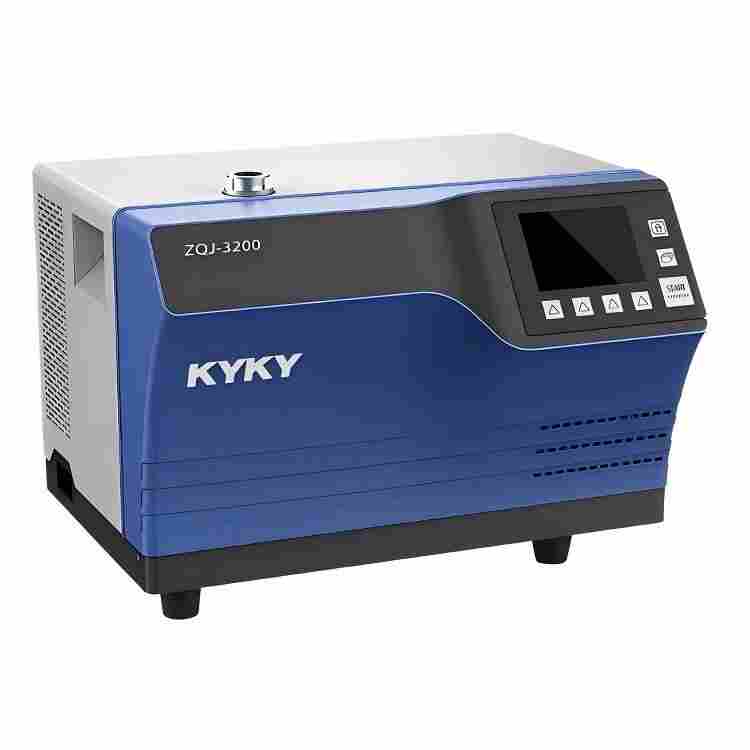
    KYKY (Beijing KYKY Technology Co., Ltd.), China's leading vacuum and leak detection equipment manufacturer, offers a comprehensive range of Helium Mass Spectrometer Leak Detectors. The primary product line, the ZQJ series, supports leak detection in vacuum mode, spray mode, and sniffing mode. These detectors are ideal for various industries, including semiconductor manufacturing, automotive, aerospace, refrigeration and air conditioning, and chemical metallurgy. The series includes portable, tabletop, and modular models. While some older models have been discontinued, they may still be available through maintenance services or the second-hand market. Below is a detailed list of KYKY Helium Leak Detector models, compiled from official catalogs and supplier information, categorized into current/active and discontinued models, along with their key features (e.g., dry/wet, main applications). This list covers major variants but is not exhaustive. Current/Active Models These models are still sold or supported on the KYKY official website and by suppliers. They emphasize high sensitivity, fast response, and the use of localized components, such as proprietary turbomolecular pumps. For more information on advanced vacuum solutions, visit our main site. Model Type Key Features Minimum Detectable Leak Rate (He) Remarks ZQJ-3000 Portable Dry Built-in turbomolecular pump + dry diaphragm pump, oil-free operation, touchscreen, automatic calibration, lightweight (<20 kg) 5 × 10⁻¹¹ Pa·m³/s (Vacuum mode); 1 × 10⁻⁸ Pa·m³/s (Sniffing mode) General industrial type, suitable for on-site maintenance and production testing; high pumping speed (3 m³/h), response time <2 s ZQJ-3200 Tabletop High-Performance Built-in high-performance mass spectrometer system, modular design, supports He/H detection, RS232 interface 1 × 10⁻¹³ Pa·m³/s (Vacuum mode) Preferred for precision applications such as semiconductor and scientific research; high leak detection pressure, wide measurement range ZQJ-530 Portable Wet Built-in oil-sealed rotary vane pump (RV), robust vehicle-mounted design, simple operation panel, integrated vacuum measurement 5 × 10⁻¹¹ Pa·m³/s (Vacuum mode) Suitable for large volume systems, easily integrated into production lines; high pumping speed, suitable for industrial environments ZQJ-530G Portable Dry Built-in dry mechanical pump + turbomolecular pump, oil-free, compact casing, optimized valve block 5 × 10⁻¹¹ Pa·m³/s (Vacuum mode) Cleanroom optimized version, suitable for medical equipment and electronics; low background interference, fast startup (<3 min) Discontinued Models These models have been removed from official production lines, but KYKY still provides spare parts, calibration, and repair support (e.g., through authorized service centers). They are commonly found in the second-hand market for legacy systems. For comprehensive support on all types of vacuum pumps and accessories, contact our experts. Model Type Key Features Minimum Detectable Leak Rate (He) Remarks ZQJ-2000 Portable Built-in oil pump, max inlet pressure 1000 Pa, basic automatic tuning 2 × 10⁻¹¹ Pa·m³/s Early economical model, suitable for small to medium-sized tests; replaced by ZQJ-3000 ZQJ-2300K Tabletop Proprietary three-flow molecular pump, wet configuration, audio alarm ~10⁻¹¹ Pa·m³/s Historical model, suitable for chemical and metallurgy industries; limited repair support Additional Notes Series Overview: The ZQJ series is based on magnetic sector mass spectrometers, supporting He-4 detection. Dry versions use oil-free pumps, suitable for clean environments, while wet versions offer higher pumping speeds but require regular maintenance. Accessories such as helium spray guns, sniffing probes, and remote controls are highly versatile. All models comply with ISO and GB/T standards. KYKY boasts nearly 50 years of accumulated leak detection technology, making it China's largest HLD R&D base. Discontinued Model Support: Discontinued models like the ZQJ-2000 can typically receive 1-3 years of repair support through KYKY service programs. Minimum detectable leak rates are based on standard test conditions. Source: Information is sourced from the KYKY official website, suppliers such as KYKY Technology Co., Ltd., and industry directories like China Powder Network. For specific part numbers (PN), pricing, or accessories for any model, it is recommended to visit the KYKY official website (kyky.com.cn) or contact a local distributor. Explore more about industrial applications and advanced solutions at Taixing Pump.
  • EVA Foaming Water Circulation Vacuum System for Efficient Production EVA Foaming Water Circulation Vacuum System for Efficient Production Jan 08, 2026
    In fields such as photovoltaic EVA encapsulation, high-end shoe material foaming, and medical packaging molding, the stability of the vacuum system directly determines product qualification rates and production efficiency. Issues like excessive bubble rates, prolonged defoaming time, and equipment corrosion by media often stem from improper selection. Today, combined with the industry-leading water circulation vacuum system technology, we will break down the precise selection plan for EVA foaming vacuum systems from selection logic, core advantages, practical cases to future trends, helping you avoid selection pitfalls and achieve cost reduction and efficiency improvement. I. First Understand Your Needs: 3 Core Scenarios Define the Direction The key to selection is "prescribing the right medicine"—different vacuum requirements and working conditions correspond to completely different solutions: High vacuum scenarios (ultimate vacuum 0.1-1 mbar): Suitable for photovoltaic EVA film encapsulation, precision sports shoe midsole foaming and other scenarios with strict vacuum requirements. A combination of "oil-lubricated rotary vane pump/dry screw pump as the main pump + water ring pump as the backing pump" is required to ensure vacuum stability and eliminate bubble residue. Medium vacuum scenarios (3-30 kPa): Preferred for shoe material rapid defoaming, ordinary packaging material molding and other scenarios. Directly adopt the four-way valve block integrated water ring vacuum system, which reduces pipe joints by more than 50%, significantly lowers leakage risks, and maximizes pumping efficiency. Complex multi-medium scenarios: When the working condition contains mold release agent moisture, dust or VA decomposition products, the German Rockwell LMT series water ring pump is the optimal solution. Through integrating filters and vacuum pressure gauges, it realizes real-time monitoring of gas-liquid separation and easily handles corrosive and impurity-containing mixed gases. II. Water Circulation Vacuum System: 3 Core Advantages Outperform Traditional Solutions As the "efficiency engine" of EVA foaming, the technical advantages of the water circulation vacuum system are reflected in the entire production process: More reliable structure: Patented four-way valve block integrated design with straight pipe arrangement not only facilitates installation but also significantly reduces subsequent maintenance difficulty, allowing novices to get started quickly. Strong adaptability: Equipped with corrosion-resistant materials such as fluororubber seals, it can withstand high-temperature (180℃) foaming processes and easily handle gases containing vinyl acetate (VA) decomposition products, without fear of corrosion from complex media. Cost-saving energy consumption: Intelligent adjustment of water supply valve opening + cooling tower circulating water linkage reduces energy consumption by 30%-40% compared with traditional water ring pumps, resulting in considerable electricity cost savings during long-term operation. III. Avoid Parameter Pitfalls: Precisely Match Working Conditions in 5 Dimensions Focus Dimension Adaptation Points Practical Suggestions Vacuum range Choose water ring pump with 3.2-50 kPa for medium-low requirements; extend to 0.1 mbar for high requirements High-vacuum combined solutions are a must for photovoltaic and precision foaming Pumping speed Single pump 8-20 m³/min meets small and medium-sized shoe material production lines Multi-pump parallel design can increase speed to 30 m³/min for large-scale photovoltaic production lines Medium compatibility Can handle mixed gases with ≤10% mold release agent moisture and dust Equip with optional pre-installed cyclone separator when containing particles above 5μm Temperature adaptability Working fluid temperature ≤40℃ (cooling via water curtain + fan) External industrial cooling tower is required for working conditions >60℃ Environmental requirements FDA food-grade certification is required for medical packaging and other scenarios Install activated carbon waste gas treatment module to meet VOCs emission standards when needed IV. 3 Configuration Packages: From Cost Optimization to Intelligent Upgrade According to production scale and demand levels, different configuration packages can be selected to balance practicality and cost-effectiveness: Basic package: Four-way valve block + 90° ball valve + vacuum pressure gauge + metal mesh filter, suitable for small shoe material production lines. It solves defoaming problems at the lowest cost and reduces sanitation and cleaning time by 40%. Advanced package: IoT sensors + servo energy-saving system + TAIC crosslinker-specific anti-corrosion coating, designed specifically for continuous production scenarios such as photovoltaic encapsulation. It can realize linkage between vacuum degree and process parameters, and extend the service life of mechanical seals by 2-3 times. Custom package: Two-stage water ring pump set + intelligent temperature control module, customized for high-humidity regions such as Southeast Asia. It completely solves the problem of vacuum fluctuation in high-humidity environments and ensures production stability. V. Speak with Results: 3 Industry Cases Verify Effectiveness Shoe material manufacturing (a leading sports shoe manufacturer in Jinjiang): Configured with four-way valve block system + German Rockwell LMT-5161 water ring pump. Defoaming efficiency increased by 25%, energy consumption reduced by 18%, and the original 2-hour cleaning process was shortened to 48 minutes, directly improving production capacity. Photovoltaic encapsulation (a new energy enterprise in Jiangsu): Adopted "water ring pump as backing pump + dry screw pump as main pump + TAIC high-temperature resistant coating" scheme. Vacuum degree stabilized at 0.5 mbar, EVA film bubble rate <0.03%, and product qualification rate increased from 95% to 99.9%. Medical packaging (a medical device manufacturer in Guangdong): Selected oil-free water ring pump + activated carbon waste gas treatment module. It not only passed ISO 13485 medical industry certification but also achieved 100% compliance rate in odor residue testing, fully meeting medical-grade production requirements. VI. Selection Decision Tree: Quickly Lock in the Plan in 3 Minutes Is the vacuum requirement > 10 kPa? Yes → Choose basic water ring system (cost priority); No → Next step Does the medium contain corrosive gases? Yes → Configure TAIC coating + 316L stainless steel pump body; No → Next step Is 24/7 continuous operation required? Yes → Add industrial cooling tower + dual-pump redundancy design; No → Standard single-pump configuration Are there FDA/ISO and other environmental certification requirements? Yes → Activated carbon module + oil-free pump; No → Basic waste gas emission design VII. Future Trends: Intelligence + Greenization, Layout in Advance to Stay Ahead Intelligent upgrade: Starting from 2025, all systems come standard with IoT interfaces (supporting Modbus protocol), which can be directly connected to MES systems to realize real-time linkage between vacuum degree and process parameters, and full traceability of production data. Green manufacturing: The new water circulation regeneration module is launched with a wastewater reuse rate ≥85%, which not only reduces water resource consumption but also meets EU REACH regulations, helping enterprises achieve green production certification. VIII. Service Guarantee: Ensure Worry-Free Production We deeply understand that "shutdown means loss" in industrial production. To this end, we have established two major service outlets in East China and South China, providing 48-hour emergency response with a spare parts inventory coverage rate of over 90% to ensure rapid resolution of equipment failures. At the same time, our professional technical team can conduct on-site surveys of working conditions and provide full-process customized services from selection, installation to operation and maintenance. Whether you are a small and medium-sized shoe material factory pursuing cost optimization, a photovoltaic enterprise needing high stability, or a packaging manufacturer meeting medical-grade standards, you can find a suitable solution in our water circulation vacuum system solutions. Click [Online Consultation] now, submit your working condition parameters, and get an exclusive selection plan to make the vacuum system an "accelerator" for production efficiency improvement! (Note: Some content in this document may be AI-generated)
  • Vacuum technical term Jul 29, 2024
    General term 1. Standard environmental conditions: temperature is 20℃, relative humidity is 65%, and atmospheric pressure is 101325Pa. 2. Standard state of gas: temperature is 0℃ and pressure is 101325Pa. 3. Pressure (pressure): When a gas molecule passes through a hypothetical plane, the momentum change rate along the normal direction of the plane, divided by the plane area or the normal component of the force that the gas molecule acts on the surface of the vessel, divided by the surface area. 4. Pascal (symbol: Pa): International system of unit pressure unit, 1 Pa=1N / m2。 5. Pressure pressure: the pressure of a certain component in the mixed gas. 6. Full pressure: the sum of the pressures of all the components in the mixed gas. 7. Vacuum: In a state of gas less than an atmospheric pressure in a specified space. 8. Vacuum degree: the thinning of the gas in vacuum is usually expressed by the pressure value 9. Gas: a material that is not constrained by the intermolecular interaction forces and can freely occupy any space.(Note: In vacuum technology, the term "gas" is not strictly applied to non-condensable gases and vapors.) 10. Non-coagulable gas: a gas above the critical temperature, that is, a gas that cannot be liquefiated by increasing the pressure alone. 11. Steam: a gas below the critical temperature, that is, a gas that simply increases the pressure to liquefied it. 12. Saturating steam pressure: the steam pressure of a substance whose vapor is in a phase equilibrium with its condensed phase at a given temperature. 13. Saturation: the ratio of the vapor pressure to its saturated vapor pressure. 14. Saturated steam: a pressure equal to its saturated vapor pressure at a given temperature. 15. Unsaturated steam: a steam whose pressure is less than its saturated steam pressure at a given temperature. 16. Number density of molecules (in m-3): At a certain moment, the number of molecules in a volume around a point in the gas is divided by the local product. 17. Average free range: the distance that a molecule collides with other gas molecules is called the free course. The average of a quite a number of different free ranges, called the average free range. 18. Collision rate: the average number of collisions experienced when a molecule (or other specified particle) moves relative to other gas molecules (or other prescribed particles) at a given time interval, divided by that time. This average number of collisions should be achieved with a sufficient number of molecules and a long enough time interval. 19. Volume collision rate: The average number of collisions between gas molecules at a given time interval is divided by the time and the volume of the space range. The time interval and volume should not be too small. 20. Gas volume: the product of the volume occupied by an ideal gas in equilibrium and its pressure. This value must indicate the gas temperature or the value when converted to 20℃. (Note: Gas amount refers to 2 / 3 of the intrinsic energy (or potential energy) of the gas in the volume. 21. Diffusion of a gas: the movement of a gas in another medium due to a concentration gradient. The medium can be another gas (the diffusion in this case is called interdiffusion) or a condensed matter. 22. Diffusion system: the ratio of the value of the mass flow rate per unit area to the normal concentration gradient of that unit area. 23. Viscous flow: The average free path of the gas molecules is much smaller than the flow state of the small section size of the catheter *. Thus, the flow depends on the viscous nature of the gas, and the viscous flow can be laminar or retarded. 24. Viscous coefficient: the ratio of tangential force to velocity gradient per unit area in the direction of the airflow velocity gradient. 25. Poisaw flow: laminar viscous flow through the long catheter of the circular section. 26. Intermediate flow: the flow of gas through the conduit between laminar flow and molecular flow. 27. Molecular flow: The average free range of gas molecules is much larger than the flow state of the catheter section * * size. 28. Number: the ratio of the average free path of the gas molecule to the catheter diameter. 29. Molecular flow: the flow state of a gas flowing through thin-walled pores where the average free path of the molecules is much larger than the smaller pores. 30. Flow escape: the flow of gas caused by pressure differences through porous objects. 31. Heat flow escape: In the state of molecular flow, two connected containers cause gas flow due to different temperature. When the gas transmission reaches balance, the pressure gradient between the two containers occurs. 32. Molecular flow rate: In the case of a given time interval, the difference between the number of molecules crossing the surface in the given direction and the number of those molecules passing through the surface in the opposite direction, divided by that time. 33. Molecular flow rate density: Molecular flow rate divided by the surface area. 34. Mass flow rate: the mass of gas through a section at a given interval divided by that time. 35. Flow rate: the amount of gas passing through a certain section at a given time interval is divided by that time. 36. Volume flow rate: the volume of a gas passing through a certain section at a given temperature, pressure, and a given time interval, divided by that time. 37. The mole number of the gas passing through a given cross-section at a given time interval, divided by that time. 38. Maxwell velocity distribution: a velocity distribution determined by the Maxwell- -Boltzmann velocity distribution function. That is, the velocity distribution when the gas molecule is in equilibrium at a certain temperature and the distance to the device wall is greater than the average free path of the molecule. 39. Transmission odds: the irregular chance of molecules entering the catheter entry passing through the exit. 40. Molecular flow guide: The molecular flow guide through which a gas flows through two defined sections or holes of the tube is the ratio of the molecular flow rate and the difference between the average molecular number density between the two sections of the tube or on both sides of the hole. 41. Flow guide: under isothermal conditions, when the gas flows through the catheter or the hole, the flow rate and the average pressure difference between the two specified sections of the catheter or the two sides of the hole. 42. Intrinsic flow guide: The flow guide connecting the catheter (or holes) connecting these two containers over the Maxwell velocity distribution in the container. Under the molecular flow conditions, it is equal to the product of the inlet flow guide and the transmission probability. 43. Flow resistance: the reciprocal of the flow guide. 44. Adsorption: solid or liquid (adsorbent) on the gas or vapor (adsorbent) capture phenomenon. 45. Surface adsorption: gas or vapor (adsorbent) left on the surface of the solid or liquid (adsorbent) adsorption phenomenon. 46. Physical adsorption: the adsorption phenomenon due to physical action. 47. Chemical adsorption: the adsorption phenomenon due to chemistry. 48. Absorption: the diffusion of a gas or steam (adsorbent) into a solid or liquid (adsorbent). 49. Adaptation coefficient: the ratio of the average energy between a particle incident on a surface and the average energy actually exchanged on the surface to the average energy that the particle should exchange to achieve full thermal equilibrium conditions on the surface. 50. Injection rate: the number of molecules incident to the surface at a given time interval, divided by the time and the surface area. 51. Condensation rate: the number of molecules (or material mass or material mass) that condense on a certain surface area at a given time interval, divided by the time and the surface area. 52. Adhesion rate: the number of molecules adsorbed on the surface at a given time interval, divided by the time and the surface area. 53. The odds of adhesion: the ratio of the adhesion rate to the incidence rate. 54. Retention time: the average time that the molecule is constrained on the surface in the adsorbed state. 55. Migration: the movement of the molecules on the surface. 56. Desorption: the release of gas or vapor adsorbed by the material. The release can be either natural or accelerated by physical methods. 57. Gas: artificial desorption of gas from the material. 58. Bleeding the gas: the natural desorption of the gas from the material. 59. Unsuction or deflation or degas rate: the gas flow rate (or molecular flow rate) of desorption (or deflation or degas) from the material at a given time interval, divided by the time and the surface area. 60. Evaporation rate: The number of molecules (or material mass or material mass) that evaporate from a surface at a given time interval is divided by the time and the surface area. 61. Permeation: Gas passing through a solid barrier layer. The phenomenon includes the diffusion of a gas through a solid, and may also include other surface phenomena. 62. Permeability: Under the condition of stable flow, the flow rate of the gas through the barrier layer (such as the device wall) is divided by the amount of the pressure function on both sides of the barrier layer, which depends on the physical process involved in the actual penetration. 63. Omeation coefficient: the product of permeability and barrier thickness divided by the permeability surface area.
Newsletter
Join our mailing list, you will get new product release and event information as soon as possible latter

leave a message

leave a message
If you are interested in our products and want to know more details,please leave a message here,we will reply you as soon as we can.
Submit

home

products

WhatsApp